

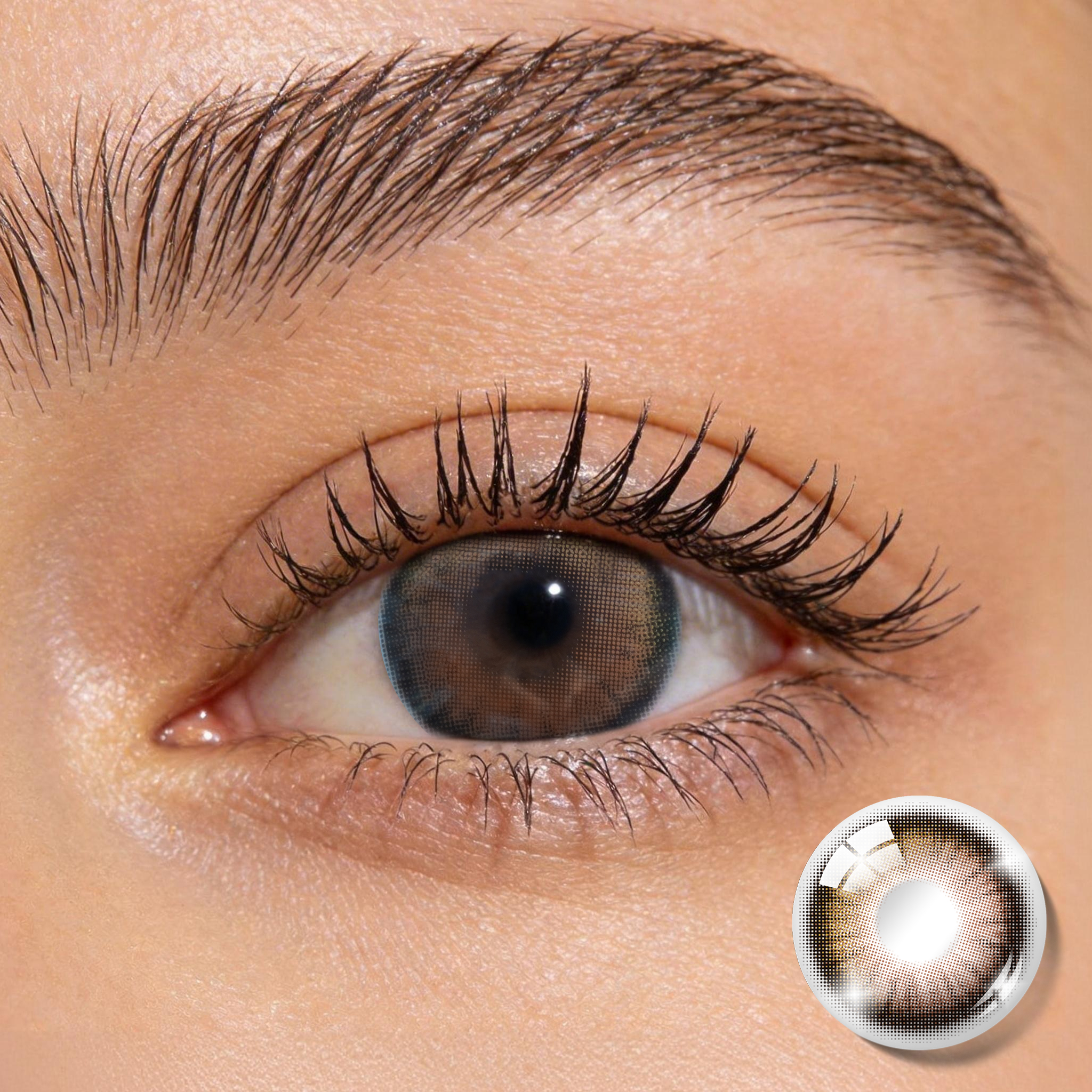
Yes, many people wear colored contact lenses with glasses. The right combination depends on your vision needs and a professional contact lens fitting. A cosmetic lens marked 0.00 changes appearance without correcting your eyesight. Your glasses can still provide the vision correction prescribed for you.
That simple answer comes with an important distinction. A glasses prescription does not replace a contact lens prescription. Even a lens with no corrective power must fit your eye. This guide explains the options, the questions to ask, and the habits that make the combination easier.
Can You Wear 0.00 Colored Contacts With Prescription Glasses?
In principle, yes. Plano, or 0.00, colored lenses do not add vision correction. Prescription glasses can provide the correction you already use. This arrangement lets you change your eye color without choosing a powered colored lens.
However, “0.00” does not mean “no prescription needed.” In the United States, decorative contact lenses are prescription medical devices. An eye care professional must assess the fit and your eyes' response. Ask whether the specific lens is suitable before wearing it.
- Colored contact lens: changes the visible iris color.
- Prescription glasses: correct vision according to your glasses prescription.
- Contact lens fitting: checks the lens material, shape, and fit for your eyes.
If you are new to lenses, read our first-pair guide before choosing a shade.

Why Your Glasses Prescription Is Not Enough
Glasses sit in front of your face. Contact lenses rest directly on the eye. That difference changes how a prescriber evaluates them. Lens measurements and the approved product matter alongside any corrective power.
The FDA advises an eye exam for decorative lenses, even when your vision seems perfect. A contact lens prescription includes more than a glasses prescription. It identifies the prescribed lens and the measurements needed for an appropriate fit.
What to bring to your appointment
- Your current glasses and glasses prescription, if you have one.
- The exact colored lens name and available specifications.
- Any history of dry eyes, allergies, or contact lens discomfort.
- Questions about wear time, cleaning, and follow-up visits.
Ask the professional whether plano colored lenses with your glasses make sense for your particular eyes. Do not use a friend's lenses to test the look. Do not assume another brand will fit the same way.
What If You Want Colored Contacts Instead of Glasses?
Some colored contact lenses have corrective power. Whether that option suits you depends on the available parameters and your contact lens prescription. Your glasses power may not match the power prescribed for contacts.
Do not select a powered lens by copying the number printed on your glasses prescription. Your prescriber can explain any difference and confirm the exact product. They can also tell you when backup glasses are useful.
A simple way to compare the two arrangements
| Arrangement | What changes your eye color? | What corrects your vision? |
|---|---|---|
| 0.00 colored contacts plus glasses | The fitted colored lenses | Your prescribed glasses |
| Powered colored contacts | The fitted colored lenses | The contact lenses, if prescribed for correction |
| Glasses only | No lens color change | Your prescribed glasses |
This table describes common arrangements, not a personal prescription. Your eye care professional determines which approach is appropriate.

How to Choose a Shade While You Wear Glasses
Your frames already shape the way your eyes appear. A lens shade can work with that effect or become the focal point. Start with the kind of result you want, then check real eye photos.
For a subtle everyday effect
Warm brown or soft gray can add definition without a dramatic contrast. A blended edge may appear softer beside thin or transparent frames. Explore Classic Brown for a familiar brown-eye direction.
For a stronger color change
Blue and icy gray create a clearer contrast on many dark eyes. The final effect still depends on your natural iris, lighting, and makeup. Compare close-ups and model photos before choosing. See Sky Blue if you prefer a cool-toned look.
Our guide to colored contacts for dark eyes explains how opacity and pattern can change the result.
Check the look in more than one setting
A shade may look different under indoor lighting and daylight. Glasses can also add reflections that affect what you notice in photos. Compare close-ups with full-face images whenever the gallery offers both.
Think about how often you will wear your frames. A soft brown can create quiet definition at work. A vivid blue may suit a planned look or an evening out. Neither choice changes the need for a correct lens fit.
If you switch between several pairs of glasses, consider how each frame color sits beside the lens shade. The goal is a look you enjoy, not a claim that one color works for everyone.
Getting Dressed and Ready With Both
A reliable routine matters more than a complicated one. Handle your lenses with clean, dry hands. Follow the cleaning and disinfecting instructions for your prescribed product. Put on your glasses only after your lenses feel comfortable and your vision is clear.
- Inspect each lens and confirm you have the correct product.
- Insert lenses according to the instructions from your eye care professional.
- Check comfort and vision before adding makeup or heading out.
- Keep your glasses available in case you need to remove the lenses.
Frames do not make a poorly fitted contact lens safe. If the lens feels uncomfortable, take it out. Do not treat a painful or red eye as a normal adjustment period.

When to Take the Lenses Out
Remove your lenses promptly if your eyes feel unusually irritated. The CDC lists redness, worsening pain, light sensitivity, sudden blurry vision, and unusual discharge as warning signs. Contact an eye care professional promptly if these occur.
Do not put the lenses back in until your eye care professional advises it. Your glasses provide a useful alternative while your eyes recover. Carrying them can make an unexpected lens removal much less disruptive.
For reusable lenses, follow the recommended care routine. Our lens cleaning guide covers the steps to discuss with your prescriber.

Frequently Asked Questions
Can I wear non-prescription colored contacts with prescription glasses?
You may be able to wear 0.00 colored lenses with prescription glasses after a professional fitting. “Non-corrective” describes the lens power, not the need for a contact lens prescription.
Can I use my glasses prescription to order powered colored contacts?
No. A glasses prescription is not a substitute for a contact lens prescription. Ask your prescriber to confirm the correct lens and power.
Will glasses protect my eyes from an uncomfortable contact lens?
No. Glasses can correct vision, but they cannot fix a contact lens fit or an irritated eye. Remove an uncomfortable lens and seek advice.
Should I keep my glasses with me?
Yes. The CDC recommends having glasses available in case you need to remove your contact lenses.
Find a Look That Works for You
Colored contacts and glasses can work together beautifully. Start with a fitted lens and a clear wear plan. Then choose a shade that suits your frames and the effect you want.
Explore Classic Brown colored contacts
Health sources: FDA: Colored and Decorative Contact Lenses; CDC: Contact Lens-Related Eye Infections.