
Meta description: Dark eyes need more pigment to show color clearly. Here's exactly which colored contact shades show up best on dark brown eyes, how to pick between natural and bold looks, and our top picks by category.
If you've got dark brown eyes and you've ever tried on colored contacts that looked amazing in the product photo but barely showed up once you put them in, you're not imagining things. Dark eyes are the most common eye color in the world, but they're also the trickiest to work with when it comes to colored contacts — and most buying guides don't actually explain why, or what to do about it.
This guide breaks down exactly what makes dark-eye-friendly lenses different, walks through the shades that actually show up on deep brown irises, and points you toward specific picks depending on the look you're going for.
Quick Answer: What Colored Contacts Work Best on Dark Eyes?
For dark brown or black eyes, you want lenses built with higher opacity and richer pigment layers, since your natural eye color is dark enough to show through low-opacity lenses and mute the color underneath. The most reliable categories for dark eyes are:
- Warm, saturated tones like amber, honey brown, and olive green — these blend with your natural warmth instead of fighting it
- High-contrast bold shades like violet-blue and teal — these need strong opacity to read clearly against a dark base
- Enlarging or halo-style designs — these use a darker limbal ring and gradient pattern specifically engineered to pop on darker irises
If a lens is only described as "natural enhancement" without any mention of opacity or dark-eye compatibility, it's more likely designed for lighter eyes and may look washed out or barely noticeable on you. Our For Dark Eyes collection is filtered specifically for lenses built with dark-eye opacity in mind, which takes the guesswork out of this step.
Why Dark Eyes Are Harder to Color (And Why That's Not a Flaw in the Lens)
Colored contacts work by layering pigment on top of your natural iris. If your natural eye color is light — blue, grey, or light hazel — almost any lens color will show up clearly because there's little natural pigment underneath competing with it.
Dark brown and black eyes have significantly more melanin, which means the lens has to work harder to visually override what's already there. A thin, low-opacity lens that looks stunning in a product photo (often shot on a model with lighter natural eyes) can end up looking like a faint tint rather than a true color change on darker irises.
This is exactly why we design certain shades — like Forest Aura Green and Nebula Violet Blue — with denser pigment layering specifically so they hold their color on dark eyes instead of blending into the background.
Choosing Your Look: Natural Enhancement vs. Bold Transformation
Before picking a specific shade, it helps to know which category you're actually going for, since dark eyes handle these two directions very differently.
Natural Enhancement (Subtle, Everyday Wearable)
These are shades meant to look like they could be your real eye color — a slightly different depth, warmth, or richness rather than a dramatic switch. For dark eyes, the trick is choosing colors close enough on the spectrum that they read as "enhanced" rather than "obviously fake," while still using enough opacity to actually shift the tone.
Good picks in this category:
- Classic Brown Colored Contacts — deepens and warms dark brown eyes without looking like a costume lens
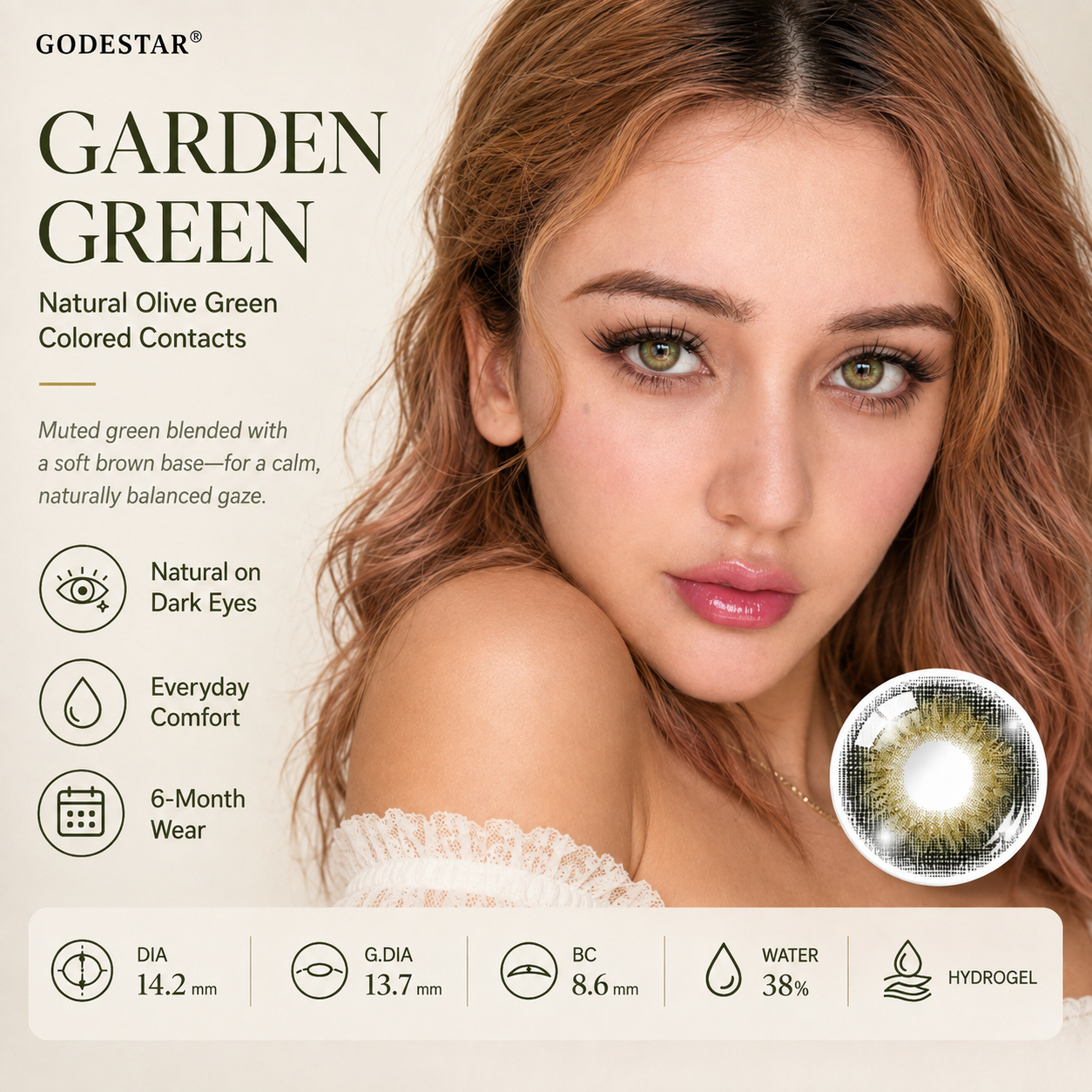
- Garden Green Colored Contacts — a soft olive green that reads as natural rather than neon
- Olive Green Colored Contacts — similar warm, earthy tone with slightly more depth
These pair well with an everyday makeup look — check out our Office Chic and No-makeup Look collections if you want the lens to be the only thing that's different about your look that day.
Bold Transformation (Statement Colors)
This is where dark eyes actually have an advantage most people don't expect: because your natural iris is dark, bold colors like violet, teal, and icy blue create dramatic, high-contrast results that lighter-eyed wearers often can't achieve with the same shade, since it just blends into their lighter natural color.
Standout picks:
- Nebula Violet Blue Colored Contacts — a purple-blue gradient built for maximum visibility on dark eyes
- Teal Aura Halation Colored Contact Lenses — vibrant teal and emerald that holds its saturation
- Smoky Quartz Halo Gray Gold Colored Contacts — a gradient halo design that adds dimension without going full-neon
If you're building a look for a specific event — cosplay, a themed party, or a photoshoot — our Cosplay / Party collection groups these bold shades together.
Warm Tones: The Underrated Sweet Spot for Dark Eyes
One thing we hear constantly from customers with dark brown eyes: warm tones tend to look more natural and more flattering than cool tones, simply because they harmonize with the existing warmth of a dark iris instead of clashing with it.
- Butterscotch Ray Warm Honey Amber Colored Contacts — a rich honey-amber that reads as a warmer, sun-kissed version of dark brown
- Matcha Bloom Contacts — fresh olive and forest green with a soft gradient pattern
If you're not sure whether you lean warmer or cooler, a quick trick: hold a piece of gold jewelry and a piece of silver jewelry near your face in natural light. If gold looks more flattering, warm tones (amber, honey brown, olive) will likely show up better and feel more "you." If silver wins, you may actually prefer the high-contrast route (violet, teal, icy blue) instead.
Enlarging and Diameter Effects: What Actually Matters for Dark Eyes
A lot of "eye enlarging" lenses lean on a bold outer limbal ring to create the illusion of bigger, more defined eyes — and this effect is especially visible on dark eyes, since the contrast between the dark ring and your natural white sclera reads clearly no matter your base eye color. If this is your goal, look specifically within our Enlarging Effect collection rather than assuming any colored lens will automatically create this look — plenty of natural-enhancement shades are designed to blend in, not stand out.
Daily vs. 6-Month Lenses: Which Should You Choose?
This is a separate decision from color, but it affects how often you'll be reordering and how you should think about trying new shades.
- Daily disposables are lower commitment if you want to experiment with a bold color for one event without wearing it long-term. Browse Daily Disposable Contacts.
- 6-month lenses (like most of the shades mentioned above) make more sense once you've found a color you plan to wear regularly, since the cost per wear drops significantly. Browse the full 6 Month Contacts collection.
If you're brand new to colored contacts altogether and don't want to commit to a full pair yet, our Try Godestar for $10 program is built exactly for this — a low-risk way to test a shade on your actual eyes before buying a full-price pair.
A Quick Note on Fit and Safety
Color is only half the equation — fit matters just as much, especially since an ill-fitting lens can shift, feel uncomfortable, or affect how the color sits on your eye. If you're unsure about sizing, our Contact Lens Size Guide walks through base curve and diameter basics. And if you're new to inserting and removing lenses, our guide on how to take contacts out faster covers practical tricks that make the whole process smoother.
All colored contacts, regardless of shade, should be treated as a prescription product. If you haven't had your eyes checked recently or need help with the paperwork side, our Prescription Verification page explains exactly what's needed before we can ship your order.
Frequently Asked Questions
Do colored contacts actually show up on dark brown eyes? Yes, but only if the lens is designed with enough opacity for dark eyes specifically. Lenses labeled for dark-eye compatibility, like those in our For Dark Eyes collection, use denser pigment layers so the color reads clearly instead of blending into your natural iris.
What color contacts look most natural on dark eyes? Warm, earthy tones like classic brown, olive green, and honey amber tend to look the most natural on dark eyes, since they harmonize with the existing warmth of a dark iris rather than contrasting sharply against it.
Will bold colors like blue or violet look fake on dark eyes? Not necessarily — dark eyes can actually carry bold, high-contrast colors especially well because of the strong contrast against your natural iris. Shades like Nebula Violet Blue are specifically designed with this contrast in mind.
Should I get daily or 6-month lenses if I'm trying a new color? If you're testing a shade you're unsure about, daily disposables are the lower-commitment option. Once you know it's a color you'll wear regularly, 6-month lenses are more cost-effective per wear.
Do I need a prescription for colored contacts even if my vision is fine? Yes. Colored contacts are a medical device regardless of whether you need vision correction, since they still sit directly on the eye. Our Prescription Verification page explains what we need before shipping.
Ready to find your shade? Browse our full For Dark Eyes collection, or start with a low-commitment $10 trial pair before going all in.