.jpg?w=1000&h=350)

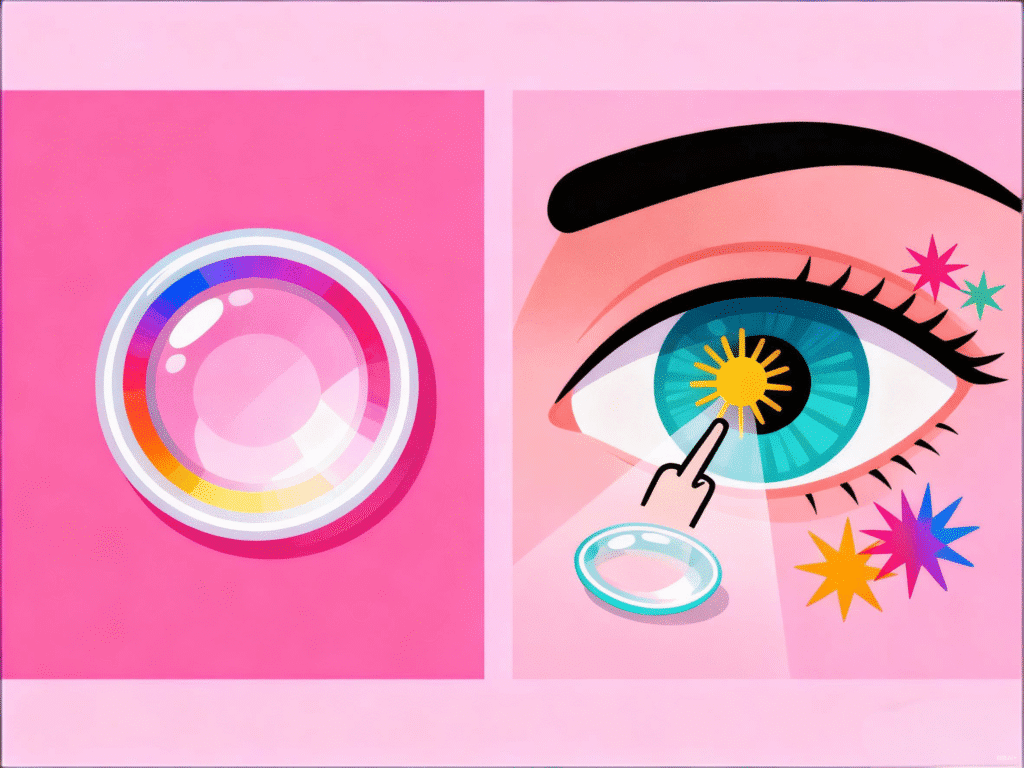
Ever wondered how a tiny, flexible disc can completely transform your eye color? Colored contacts aren't magic - they're actually a marvel of optical engineering. Think of them as a smart, ultra-thin screen that sits right over your natural iris, working with light and anatomy to create stunning new looks.
Let's break down exactly how these miniature marvels work their magic.
The Basic Structure: More Than Just Colored Plastic
A colored contact lens is essentially a three-layer masterpiece:
- The Base Lens: This is the foundation - a transparent, medically safe polymer (usually hydrogel or silicone hydrogel) that's shaped to fit perfectly over your cornea. This material allows oxygen to reach your eyes while maintaining comfort.
- The Color Layer: Here's where the magic happens! Unlike simple dye, the pigment is actually embedded within the lens material using advanced printing technology. This "sandwich" design ensures the colored particles never directly touch your eye, making modern colored contacts much safer than early versions.
- The Clear Zones: Notice how every quality colored contact has a completely clear center? This is absolutely crucial for maintaining clear vision, as we'll explore next.
The Optical Magic: How You See Through Color
This is where the real engineering brilliance comes in:
- The Transparent Pupil Zone: The very center of the lens remains completely clear, exactly aligned with your pupil. This allows light to enter your eye unimpeded, ensuring your vision stays sharp and natural. If this area were colored, everything would look dim and filtered - like wearing sunglasses indoors.
- The Color Matrix: The colored portion only covers where your natural iris sits. Using intricate patterns that mimic real iris textures - from subtle flecks to dramatic rays - the lens creates a new "front surface" for your iris while letting your pupil function normally.
- The Limbal Ring: Many lenses feature a darker outer circle that defines the edge of the iris. This creates contrast against the white of your eye, making colors appear more vibrant and eyes more defined.
The Complete Picture: A Collaborative Effect
When you put it all together, here's what happens:
- Light enters through the clear central zone → your vision remains perfect
- The colored matrix overlays your natural iris → creating your new eye color
- Your natural eye color blends with the lens color → producing the final effect
- The limbal ring provides definition → making eyes appear brighter and larger
The result? A completely natural-looking transformation that works with your eyes' natural anatomy rather than against it.
Why This Technology Matters
Understanding this design helps explain why:
- Safety: Properly manufactured lenses keep pigments away from your eyes
- Comfort: The smooth, integrated color layers don't feel any different from clear lenses
- Vision: The clear pupil zone maintains optical clarity
- Realism: Layered color patterns create depth and dimension
The next time you pop in a pair of colored contacts, remember - you're wearing some seriously sophisticated optical technology. It's not just color; it's science, art, and engineering working in perfect harmony to let you reinvent your look safely and beautifully.