.jpg?w=1000&h=350)

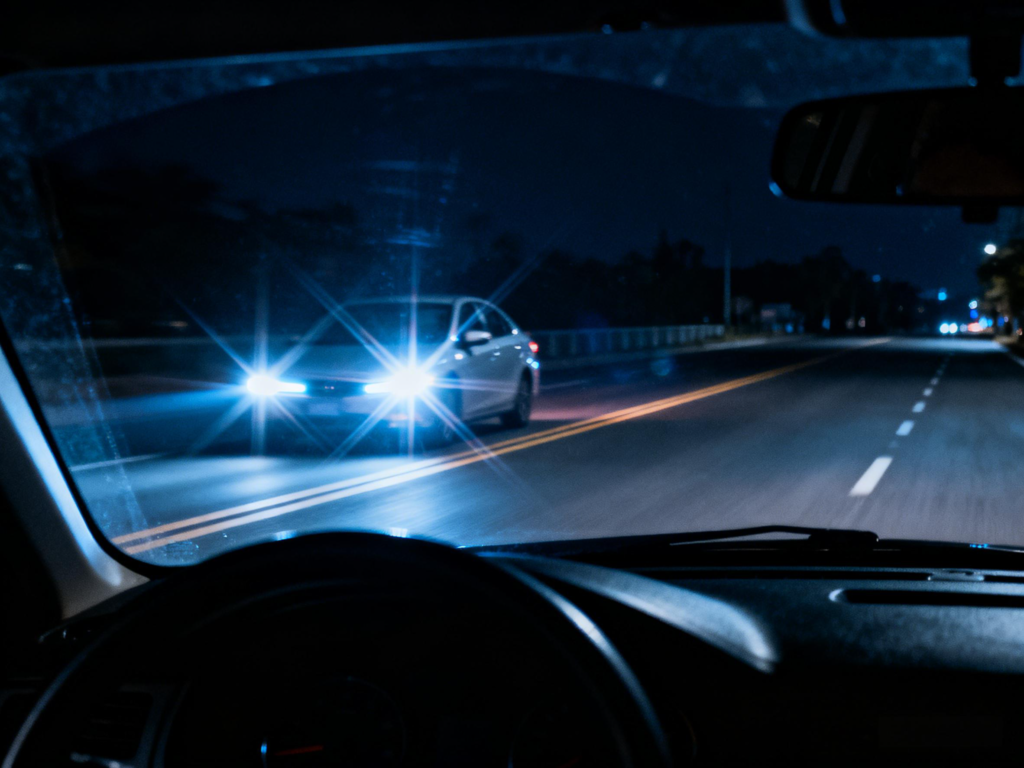
You’re driving home at night, and the streetlights ahead don’t look like sharp points—they’re fuzzy blobs with starburst edges. Or you’re scrolling your phone before bed, and the LED text has a faint, glowy halo around it. If this sounds familiar, you might be dealing with astigmatism. For millions of people, astigmatism isn’t just a “vision problem”—it’s a daily annoyance that warps how they see lights, from car headlights to kitchen bulbs. But why does this happen? And is there a way to fix it? We’re breaking down the science behind astigmatism and its unique impact on light perception, with clear answers from eye care experts.
First: What Is Astigmatism, Exactly?
Let’s start with the basics. Astigmatism is a common refractive error—meaning it’s not an eye disease, but a quirk in how your eye bends (refracts) light. To understand it, think of a healthy cornea (the clear, dome-shaped layer covering your eye) like a basketball: round, with the same curve in every direction. This even curve bends light evenly, focusing it sharply on your retina (the light-sensitive tissue at the back of your eye).
“With astigmatism, the cornea is more like a橄榄球,” explains Dr. Elena Marquez, a board-certified optometrist with a focus on refractive errors. “It’s steeper in one direction and flatter in the other—like someone pressed down on one side of a basketball. This uneven curve means light doesn’t focus on a single point on the retina; instead, it scatters across multiple points. That’s what causes blurriness, especially with lights.”
In some cases, astigmatism comes from an irregularly shaped lens (the part inside your eye that adjusts focus) instead of the cornea—but the end result is the same: distorted light perception.
The Science of “Glowy” Lights: Why Astigmatism Warps Light
Lights are particularly tricky for people with astigmatism because they emit bright, concentrated beams—any error in how your eye refracts that light gets amplified. Here’s why three common light-related symptoms happen:
1. Blurry Lights: Scattered Light = Unclear Signals
When a light source (like a lamp or traffic light) hits your eye, a healthy cornea bends all its rays to meet at one spot on the retina. With astigmatism, the uneven curve splits those rays: some focus in front of the retina, some behind it, and some right on it. Your brain can’t make sense of these conflicting signals, so the light looks soft and out of focus instead of sharp.
“This is why someone with astigmatism might squint to see a street sign at night,” Dr. Marquez adds. “Squinting temporarily reduces the amount of light entering the eye and narrows the ‘field’ of scattered rays, making the light feel slightly clearer.”
2. Glowy Halos or Starbursts: Light Spreading Beyond the Retina
The most common complaint? Halos—fuzzy, circular glows around lights—or starbursts, where light spreads out in sharp, spiky lines. This happens because the irregular cornea doesn’t just misfocus light—it scatters it across the retina’s light-sensitive cells (rods and cones).
LED lights and headlights are the worst culprits, thanks to their bright, concentrated beams. “LEDs emit a narrower wavelength of light, which means the scattered rays are more noticeable,” Dr. Marquez explains. “Many patients tell me they avoid driving at night because the starbursts from oncoming cars make it hard to see the road.”
3. Double Vision: Two Sets of Light Rays = Two Images
For people with moderate to severe astigmatism, lights (or even text) might look doubled—like two overlapping images. This is a more extreme version of light scattering: the cornea’s two different curves bend light into two distinct focal points on the retina. Your brain receives two separate “pictures” of the light, so it perceives a double image.
Double vision from astigmatism is usually worse with small, bright lights (like phone screens or reading lamps) and can cause eye strain if you’re staring at them for long periods.
How to Tell If Your “Glowy Lights” Are From Astigmatism
Astigmatism often gets mixed up with nearsightedness (myopia) or farsightedness (hyperopia), but there are key differences. Here’s how to spot the signs:
- Symptoms get worse at night: Nearsightedness makes distant objects blurry all day, but astigmatism’s light distortion is more noticeable in low light (when your pupils dilate, letting in more scattered light).
- Both near and far lights are affected: You might struggle with a phone screen up close and streetlights far away—unlike nearsightedness (only far) or farsightedness (only near).
- Eye strain and headaches: Squinting to fix blurry lights tires out your eye muscles, leading to tension headaches (especially after driving or using screens).
- You tilt your head to see clearly: Some people unconsciously tilt their head to align the light rays with the “flatter” part of their cornea, reducing distortion.
What to Do If Astigmatism Is Warping Your Lights
The good news? Astigmatism is easy to correct, and fixing it will eliminate those blurry, glowy lights. Here are the expert-recommended solutions:
1. Get a Comprehensive Eye Exam (First Step!)
Astigmatism can’t be self-diagnosed—you need an optometrist to measure your cornea’s curve with a tool called a keratometer. They’ll also check if you have “mixed” astigmatism (combined with nearsightedness or farsightedness) and prescribe the right correction.
“Many people think their light issues are ‘just part of getting older,’ but astigmatism can develop at any age—even in kids,” Dr. Marquez warns. “Early correction prevents long-term eye strain.”
2. Corrective Lenses: Glasses or Contacts
- Glasses: Toric lenses (specialized for astigmatism) have different powers in different directions, matching your cornea’s uneven curve. They’re the simplest fix for mild to moderate astigmatism.
- Contacts: Toric contact lenses are weighted to stay in place (so they don’t rotate and mess up the correction). For active people, they’re better than glasses for night driving (no glare from lens frames).
3. Permanent Solutions: Refractive Surgery
If you want to ditch lenses, procedures like LASIK or PRK reshape the cornea to make its curve more even. “LASIK works well for most astigmatism cases—we use a laser to smooth the steeper parts of the cornea, so light focuses correctly,” Dr. Marquez says. Candidates need stable vision (no big prescription changes in a year) and healthy eyes.
4. Temporary Fixes for Night Driving
While you’re waiting for correction, these tips can reduce light distortion:
- Use anti-glare glasses or contacts (they reduce scattered light from headlights).
- Keep your windshield clean—smudges or dirt amplify light halos.
- Adjust your car’s dashboard lights to the dimmest setting (bright dash lights make it harder to adapt to nighttime light).
The Bottom Line: You Don’t Have to Live With Glowy Lights
Astigmatism’s light distortion isn’t just a “minor annoyance”—it can affect your safety (night driving) and daily comfort (screen use). The key is to stop dismissing it as “normal” and get an eye exam. With the right correction, streetlights will go back to being sharp points, phone screens will lose their halos, and your eyes will feel less strained.
“I had a patient who avoided going to concerts because the stage lights looked like a blurry mess,” Dr. Marquez shares. “After getting toric contacts, she said it was like ‘seeing the world in HD for the first time.’ That’s the difference correction makes.”
4:3 Main Image Idea: Information-graphic style illustration (clean lines, soft colors) showing two side-by-side comparisons—left: “Healthy Eye” with a round cornea and a sharp, focused light beam hitting the retina; right: “Astigmatism Eye” with a football-shaped cornea and scattered light beams creating a glowy halo on the retina. Labeled with simple icons (no text) for “cornea” and “retina,” 4:3 aspect ratio, color palette of calm blues and grays to keep it professional and easy to understand.