.jpg?w=1000&h=350)

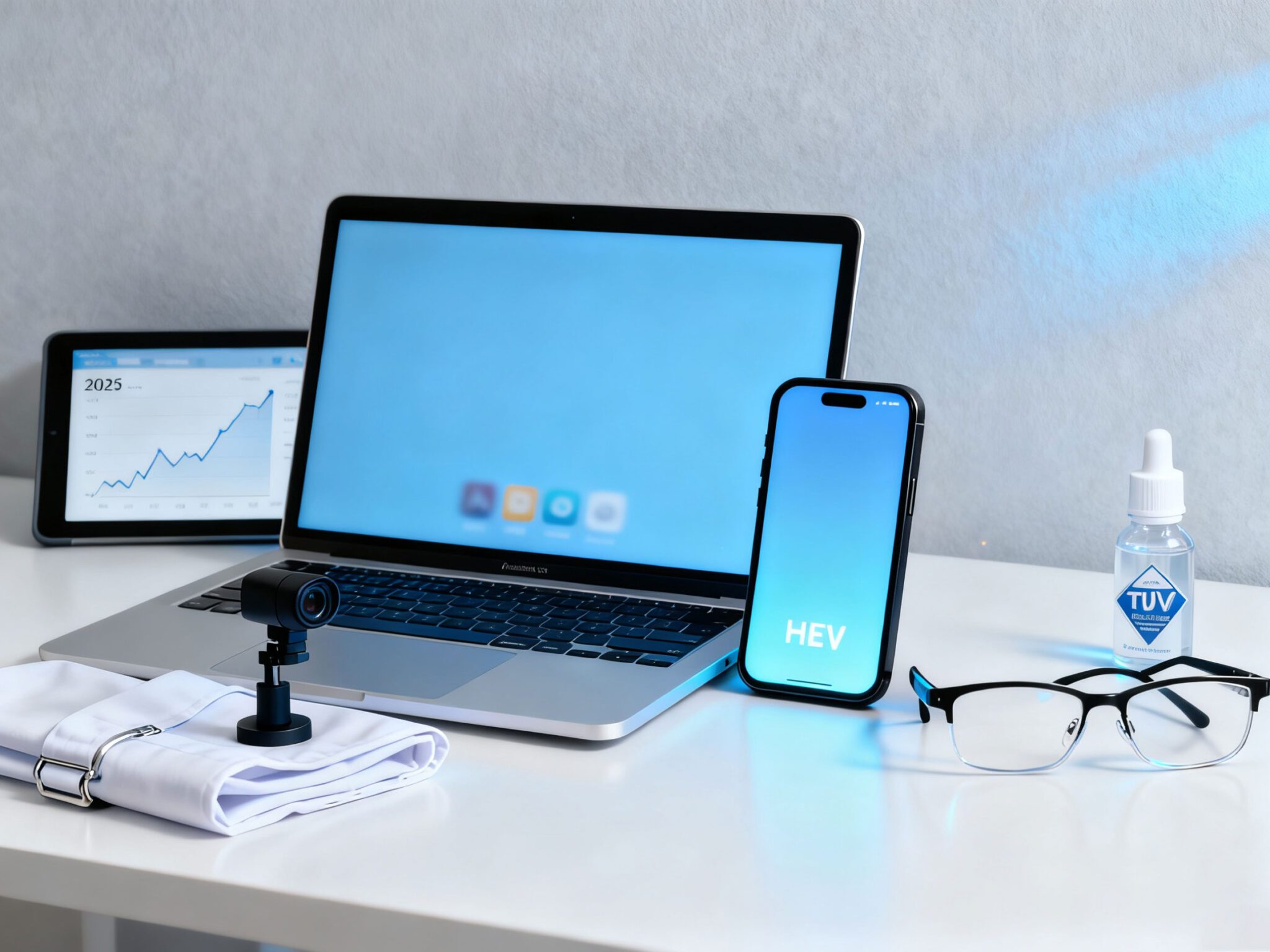
“Last month alone, I treated 12 patients under 30 for early-stage macular degeneration—all of them spend 10+ hours daily on phones, laptops, or tablets.” Dr. Marcus Reed, a fellowship-trained ophthalmologist and digital eye health specialist, doesn’t mince words. The 2025 Digital Eye Health Report, released by the American Academy of Ophthalmology (AAO), confirms his concern: global cases of “digital eye syndrome” (DES) have risen 47% since 2022, with 83% of adults and 61% of children reporting symptoms like dry eyes, blurred vision, or headaches linked to screen time. Worse, 2025 research reveals that the damage isn’t just temporary—it’s cumulative, with long-term screen exposure increasing the risk of permanent vision loss. This isn’t fearmongering—it’s data-driven reality. Here’s what Dr. Reed wants you to know about how your devices are harming your eyes, and how to fight back.
The 3 Hidden Ways Digital Devices Damage Your Eyes (2025 Research Breaks It Down)
Most people blame “blue light” for digital eye harm—and while it’s a culprit, it’s not the only one. Dr. Reed breaks down the three key mechanisms, backed by 2025 peer-reviewed studies:
1. High-Energy Visible (HEV) Light: More Than Just “Blue Light”
HEV light (the blue-violet spectrum) penetrates deeper into the eye than UV rays, reaching the retina’s sensitive macula. A 2025 study in Ophthalmology found that prolonged HEV exposure breaks down retinal pigment epithelium (RPE) cells—critical for maintaining clear vision. “Think of RPE cells as the ‘battery’ for your retina,” Dr. Reed explains. “Every hour on a screen drains that battery, and once they’re damaged, they don’t grow back.” The risk is highest with OLED screens (common in iPhones and Samsung Galaxy devices), which emit 30% more HEV light than LCDs.
2. “Digital Strain” from Unnatural Eye Movement
When you read a book, your eyes blink 15-20 times per minute. When you stare at a screen? That number drops to 5-7 blinks per minute, per 2025 AAO data. This “blink suppression” dries out the eye’s tear film, causing irritation and gritty discomfort. But the bigger issue is “accommodative strain”—your eyes work overtime to focus on close-up screens, never getting a break. “It’s like holding a dumbbell at chest height for 8 hours,” Dr. Reed says. “Eventually, the muscles tire, leading to blurred vision and tension headaches.”
3. Circadian Disruption Worsens Eye Health
HEV light suppresses melatonin, the hormone that regulates sleep—but 2025 research links poor sleep to worse eye health, too. A study from the University of California found that people who use devices 1 hour before bed (and get less than 7 hours of sleep) have 2x higher levels of eye inflammation than those who disconnect earlier. “Sleep is when your eyes repair themselves,” Dr. Reed notes. “Chronic sleep loss from screen use robs your eyes of that critical recovery time.”
Short-Term vs. Long-Term Damage: What to Watch For (2025 Symptom Guide)
Digital eye harm happens in two phases: immediate discomfort and long-term, potentially permanent damage. Dr. Reed shares the key signs to never ignore, based on 2025 clinical guidelines:
Short-Term (1-2 Hours of Screen Time): Red Flags
- Dry, scratchy eyes that don’t improve with artificial tears
- Temporary blurred vision when looking up from your screen
- Tension in your temples or forehead (eye muscle fatigue)
- Sensitivity to bright lights (photophobia)
Long-Term (6+ Months of Daily Heavy Screen Use): Emergency Signs
- Persistent blind spots or “floaters” in your field of vision (possible retinal detachment)
- Difficulty seeing fine details (e.g., reading small text) — early macular degeneration
- Involuntary eye twitching (myokymia) that lasts more than a week
- In children: Rapidly worsening nearsightedness (myopia progression) — 2025 data shows kids who use screens 4+ hours daily are 3x more likely to need stronger prescriptions yearly
Who’s Most at Risk? 2025 Data on Vulnerable Groups
Not everyone faces the same risk. Dr. Reed highlights the groups that need extra protection, based on 2025 AAO demographics:
- Remote Workers: 91% of people working from home spend 8+ hours on screens (vs. 5 hours in-office), leading to a 62% higher DES rate.
- Children (6-18): Their eyes are still developing (retinas mature at 20), making them 4x more susceptible to HEV light damage.
- Gamers: 78% of gamers play 3+ hours per session, with 50% reporting “eye burn” after marathons—OLED gaming monitors emit the highest HEV levels.
- People with Pre-Existing Conditions: Dry eye syndrome or diabetes patients are 2.5x more likely to develop complications from screen use.
Dr. Reed’s 2025 Digital Eye Protection Plan (Science-Backed)
The good news? 2025 research proves that simple, consistent changes can reduce digital eye damage by 70%. Here’s Dr. Reed’s step-by-step plan, tailored to different screen habits:
1. Optimize Your Device Settings (5-Minute Fix)
- HEV Light Filter: Enable “Night Shift” (iOS) or “Night Light” (Windows) — set color temperature to 3000K-3500K (warm yellow, not orange). For all-day use, use a third-party app like f.lux (free) to auto-adjust based on time of day.
- Brightness & Contrast: Match screen brightness to ambient light (use the “white paper test”: hold a sheet of paper next to your screen—they should look the same). Set contrast to 70-80% to reduce eye strain.
- Font Size: Increase text to 125% (Windows) or “Default +1” (iOS) — you shouldn’t squint to read emails or social media.
2. Master the “Screen Habit Reset”
- The 20-20-20 Rule (Updated 2025): Every 20 minutes, look at something 20 feet away for 20 seconds—and blink 10 times slowly. A 2025 study found adding intentional blinking doubles tear film health.
- Screen Distance: Keep phones 16-18 inches from your eyes, laptops 20-24 inches. Use a monitor stand to raise your screen so the top 1/3 is at eye level (reduces neck and eye strain).
- Bedtime Boundary: Stop using devices 1 hour before bed. If you must use them, wear blue light glasses (TÜV-certified) and enable “Dark Mode.”
3. Invest in 2025’s Best Protective Tools
Dr. Reed’s top picks for 2025, tested for efficacy:
- Blue Light Glasses: Look for “TÜV Rheinland” or “FDA-Cleared” labels (avoid cheap Amazon knockoffs). His favorite: Warby Parker Lowry with Blue Light Filter (affordable, stylish).
- HEV-Blocking Screen Protectors: For OLED phones/laptops, try ZAGG InvisibleShield Glass+ VisionGuard (blocks 40% of HEV light).
- Prescription Lenses: If you wear glasses, ask your optometrist for “digital protection” coatings (e.g., Crizal Prevencia) — they block HEV light and reduce glare.
- Artificial Tears: Use preservative-free drops (e.g., Systane Ultra) 2-3 times daily—avoid “redness-reducing” drops (they worsen dryness long-term).
4. Don’t Skip Annual Eye Exams (Even If You Have 20/20 Vision)
“The biggest mistake people make is waiting until they have symptoms to see an eye doctor,” Dr. Reed says. 2025’s advanced retinal cameras can detect early HEV damage 3-5 years before symptoms appear. For adults 18-40: annual exams. For children and high-risk groups (gamers, remote workers): exams every 6 months.
“Digital devices aren’t going anywhere—and we don’t need to quit them to protect our eyes. What we need is to use them smarter.” — Dr. Marcus Reed, 2025 Digital Eye Health Summit
2025 Emergency Alert: If you experience sudden vision loss, flashes of light, or a “curtain” closing over your field of vision, go to the ER immediately. These are signs of retinal detachment—a medical emergency linked to long-term screen strain, which can cause permanent blindness if untreated.
Your eyes are the only “screens” you can’t replace. In 2025, with devices more integral to our lives than ever, protecting them isn’t a “nice-to-have”—it’s a necessity. By adjusting your settings, resetting your habits, and investing in simple tools, you can turn your devices from a threat into a tool that works with your eyes—not against them. Remember: Every hour you spend protecting your eyes today is an hour of clear vision you’ll thank yourself for tomorrow.