.jpg?w=1000&h=350)

For makeup enthusiasts and beauty lovers, colored contact lenses (often called “color contacts”) are a game-changer. They can enhance your natural eye hue, complement a bold makeup look, or even transform your appearance for a special occasion. But there’s one frustrating hurdle that even seasoned wearers face: mixing up the front and back of the lenses. Wearing color contacts inside out isn’t just a cosmetic letdown—it distorts the lens’s intended color payoff, makes your eyes look uneven, and can lead to uncomfortable side effects like redness, stinging, or even corneal irritation. Unlike clear contact lenses, color contacts feature intricate pigment layers and patterns that add extra complexity to distinguishing sides. This guide breaks down foolproof methods tailored to color contacts, so you can get it right every time.
Why Color Contacts Are Trickier to Tell Apart
Before diving into the identification techniques, it’s important to understand why color contacts pose a greater challenge than their clear counterparts. Most color contacts have a pigment ring or gradient pattern printed on the front surface to create a natural, eye-enhancing effect. When flipped inside out, this pigment layer can appear faded, misaligned, or even slightly wrinkled—but the difference is often subtle, especially for first-time users. Additionally, color contacts are slightly thicker than clear lenses to hold the pigment, which can make the “edge curl” (a key indicator for clear lenses) less obvious. Recognizing these unique traits will help you spot the difference more quickly and accurately.
4 Foolproof Methods for Color Contacts
These methods leverage the distinct design features of color contacts, ensuring reliability whether you’re wearing daily disposables, monthly lenses, or specialty cosmetic lenses. Start with Method 1 (the most dependable) and use the others as backups if you’re unsure.
Method 1: The “Perfect Bowl” Test (Most Trusted)
This classic technique works for all contact lenses but requires a slight adjustment for color variants, as their pigment can mask subtle shape differences. Follow these steps for accuracy:
- Prep your hands: Wash thoroughly with fragrance-free, antibacterial soap and dry with a lint-free towel. Oil, makeup residue, or lotion on your fingers can damage the lens’s pigment or irritate your eyes.
- Handle with care: Use contact-specific tweezers or the pad of your index finger to gently lift the lens from its case. Avoid pinching the center—this can fold the pigment layer and distort the shape.
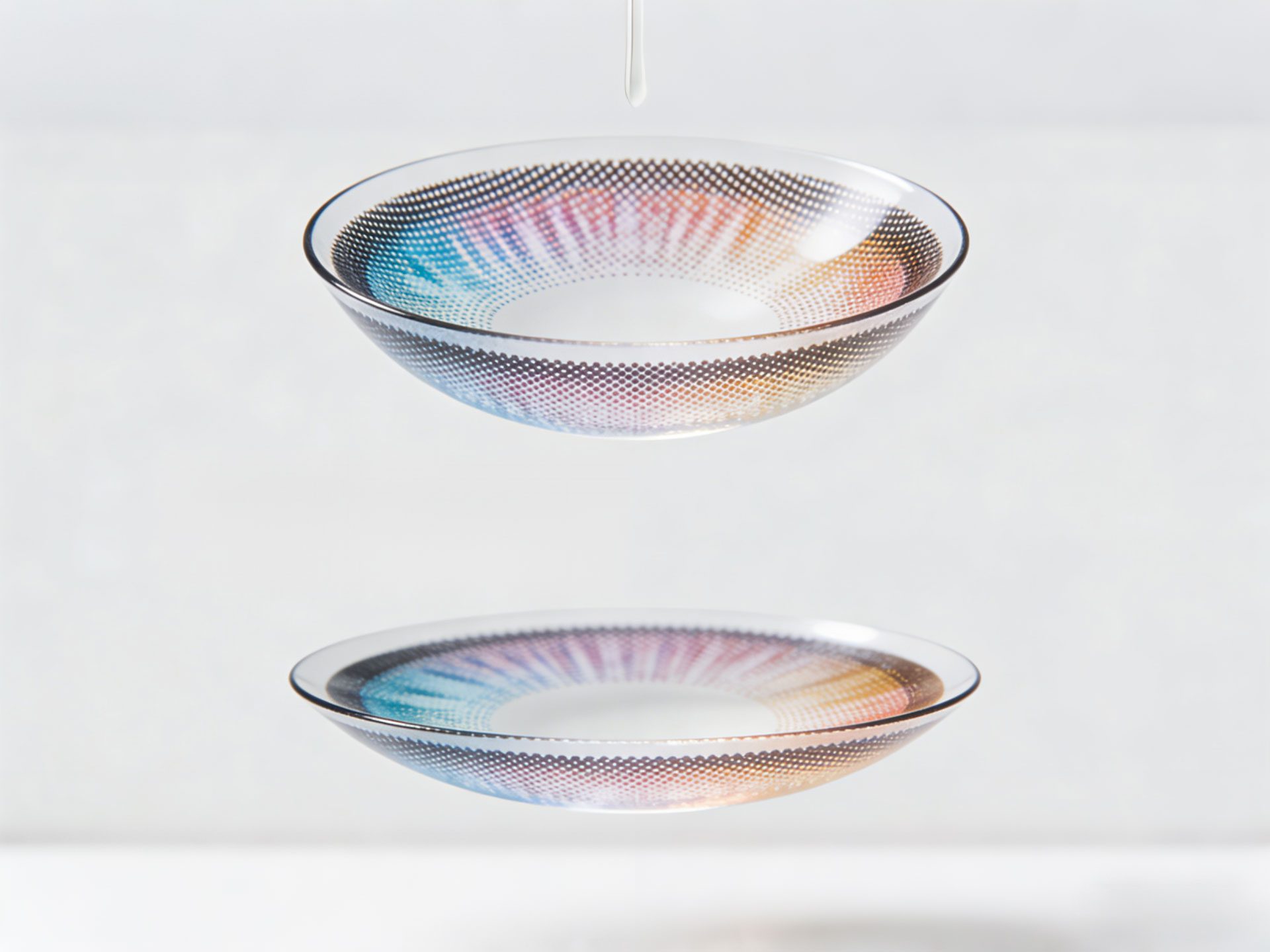
- Inspect the shape: Place the lens on the tip of your index finger and hold it at eye level against a neutral background (a white wall or a black phone case works well). Front (Correct Side): The lens will form a smooth, rounded “bowl” shape, similar to a tiny soup bowl. The colored pattern—whether it’s a honey-brown gradient, a starburst design, or a solid pigment ring—will look vibrant, centered, and evenly distributed. The outer edge will curve inward gently, hugging the shape of your eye.
- Back (Inside Out): The lens will appear flattened, with a “saucer-like” edge that curls outward slightly. The colored pattern will look washed out or distorted; you might notice the lighter center of the lens peeking out from the outer edge, or the pigment ring will seem lopsided.
Pro Tip: For light-colored lenses (e.g., gray, blue, or pastel pink), hold the lens over a dark surface to enhance shape contrast. For dark-colored lenses (e.g., black, deep brown, or emerald green), use a light background—this makes the edge curl much easier to spot.
Method 2: The “Pattern Alignment” Trick (Color Contacts Exclusive)
Manufacturers design color contact patterns to look natural and flattering when worn correctly—this intentional design is your secret weapon for distinguishing sides. Here’s what to look for based on common lens styles:
- Gradient or Halo Lenses: Most color contacts feature a darker pigment ring on the outer edge (to make eyes appear larger) and a lighter, more translucent center (to mimic the natural iris). When front-facing, this gradient is smooth and seamless: dark outer → light inner. When flipped, the gradient reverses or becomes patchy—you might see the light center bleeding into the outer edge.
- Intricate Patterns (Starburst, Cat Eye, etc.): Lenses with detailed designs are printed to align with your pupil. Front-facing, starburst points will radiate toward the center, and cat-eye flicks will follow the natural curve of your lash line. Inside out, the pattern will twist—starburst points may face outward, and cat-eye details will look misaligned or “backward.”
- Two-Tone or Tri-Tone Lenses: Lenses with multiple distinct colors (e.g., green outer + hazel inner + gold flecks) have sharp, even color boundaries when front-facing. Flipped, these boundaries blur or shift, creating a muddled, unnatural appearance.
Method 3: The “Edge Check” for Thicker Color Lenses
Color contacts are slightly thicker than clear lenses to hold pigment, which actually makes their edges easier to inspect—if you know how to handle them gently. Follow these steps:
- Gently place the lens between your thumb and index finger, pinching only the very outer edge (avoid touching the pigmented center).
- Roll the edge between your fingers slowly, feeling for texture and shape: Front: The edge feels smooth, rounded, and consistent. It will roll easily without folding or catching.
- Back: The edge feels “rough” or curled outward, like the rim of a flipped cup. Rolling it will cause the lens to fold unevenly, as the pigment layer (now on the inside) resists smooth movement.
Method 4: The “Trial and Error” Test (Last Resort)
If you’re still uncertain after using the above methods, a gentle trial can help—but only if the lens is clean and your hands are sanitized. Insert the lens as usual, blink once or twice, and evaluate two key factors:
- Aesthetics: A correctly placed color lens enhances your eyes seamlessly. If the color looks dull, ashy, or misaligned (e.g., the pigment ring sits too close to your pupil), it’s inside out. Front-facing lenses should make your eye color pop, not wash it out.
- Comfort: A flipped lens will feel “off” immediately. You may notice a slight scratchy sensation, dryness, or the feeling that something is “rubbing” against your eye. A properly positioned lens should feel invisible within 30 seconds of insertion.
If either issue occurs, remove the lens immediately, rinse it with fresh contact lens solution (never tap water), and recheck using Method 1.
Common Mistakes to Avoid
Even with the right techniques, small errors can lead to mix-ups. Steer clear of these pitfalls to keep your lenses—and eyes—in top shape:
- Pinching the lens center: Squeezing the middle of color contacts can smudge the pigment or fold the lens, making shape identification nearly impossible. Always handle lenses by the outer edge.
- Using dirty tools: Contaminated tweezers or contact cases (with leftover solution, makeup, or bacteria) can make lenses sticky, causing them to flip when you pick them up. Clean your tools weekly with boiling water (let cool completely) and replace cases every 3 months.
- Rushing the check: When you’re in a hurry to finish your makeup, it’s tempting to skip the shape check. Spend 2 extra seconds—this avoids irritation and the hassle of redoing your entire look.
- Confusing dryness with being flipped: A dry lens may curl at the edge, but it will feel stiff. A flipped lens remains flexible—if it’s stiff, add a drop of contact solution before inspecting the shape.
What to Do If You Wear Flipped Color Contacts Accidentally
If you realize you’ve been wearing a flipped lens for 15 minutes or less, don’t panic. Follow these steps to correct the issue safely:
- Wash your hands thoroughly with antibacterial soap and dry them.
- Gently remove the lens using clean fingers or tweezers.
- Rinse the lens with fresh contact lens solution to remove any debris or oils.
- Recheck the lens using Method 1, then reinsert it correctly.
- If your eye feels dry or slightly irritated, use preservative-free rewetting drops (formulated for color contacts) to soothe it.
If irritation persists for more than an hour, or if you experience redness, pain, blurred vision, or light sensitivity, remove the lens and contact your optometrist immediately—these could be signs of a minor corneal scratch.
Expert Tips for Color Contact Wearers
- Test new lenses first: When opening a new pair of color contacts, always do the “bowl test” before bringing them near your eyes. Factory packaging can sometimes shift the lens, causing it to flip.
- Use good lighting: Natural light or a bright, cool-toned lamp makes pattern details and lens shape much easier to see. Avoid applying lenses in dimly lit bathrooms or bedrooms.
- Stick to reputable brands: Cheap, unregulated color contacts often have uneven pigment layers and inconsistent shapes, making them harder to distinguish and increasing irritation risk. Always buy from FDA-approved retailers and consult your optometrist before trying new brands.
- Store lenses properly: Always place lenses in their case with fresh solution after use. Never leave them in water or saliva—this promotes bacterial growth and damages the pigment.
“Color contacts are a blend of beauty and biology. Distinguishing front from back isn’t just about looking good—it’s about protecting your eye health. With a little practice and the right techniques, it becomes second nature.” — Dr. Emma Carter, Optometrist Specializing in Cosmetic Contact Lenses
At the end of the day, distinguishing the front and back of color contacts is a skill that improves with practice. By focusing on the lens’s shape, pattern alignment, and edge feel, you’ll avoid cosmetic mishaps and keep your eyes comfortable and healthy. Remember: a well-placed color lens should enhance your natural beauty—not cause frustration. With these methods, you’ll master the art of getting it right every time.