.jpg?w=1000&h=350)

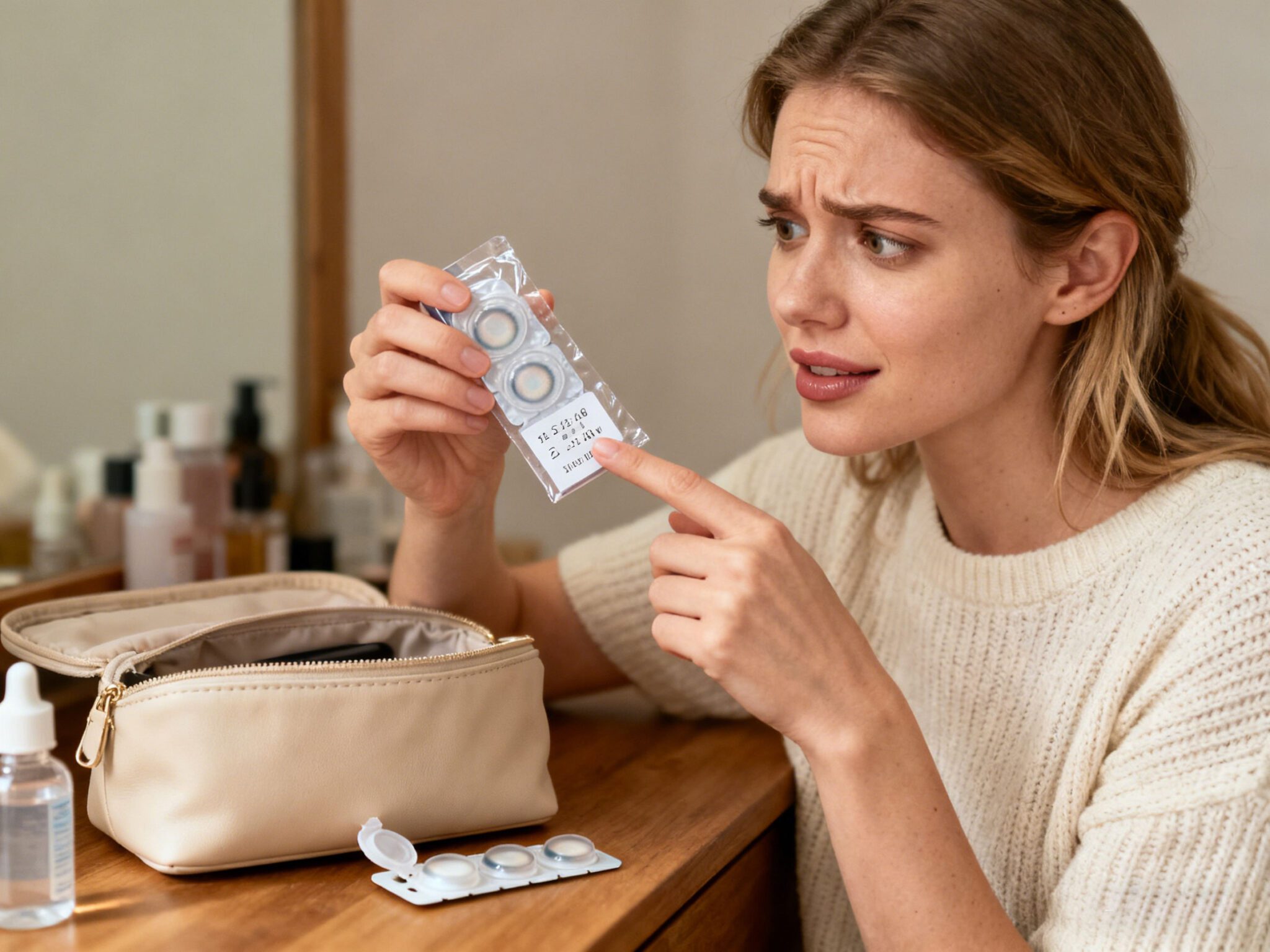
You’re digging through your makeup bag and find a forgotten box of daily colored contacts—unopened, still sealed in plastic. “They’re brand new,” you think. “Surely they’re fine to wear, right?” This is one of the most common myths eye doctors hear, and the 2025 FDA Contact Lens Safety Report sets the record straight: Yes, daily colored contacts expire—even if they’ve never been opened. The consequences of ignoring that expiration date? Anything from itchy eyes to serious corneal infections. We’re breaking down why unopened dailies go bad, how to spot an expired box, and what to do to keep your eyes safe.
The Short Answer: Unopened Daily Colored Contacts Do Expire—Here’s Why
Daily colored contacts are designed as “single-use, sterile products,” and their expiration dates (found on the outer box) aren’t arbitrary. They’re based on two scientific truths that even a tight seal can’t stop:
1. Lens Material Degrades Over Time
Daily colored contacts are made of soft, water-absorbent materials like hydrogel or silicone hydrogel. These materials break down slowly, even in airtight packaging. The 2025 study by the American Optometric Association (AOA) found that unopened dailies stored past their expiration date show a 30% increase in surface roughness. This roughness irritates the cornea and traps bacteria—even if you’ve never touched the lens.
“The material’s ‘water-holding’ ability fades too,” explains Dr. Maya Patel, a 2025 FDA safety panel member. “An expired daily lens won’t stay moist as well, leading to dryness and blur within minutes of insertion.”
2. The Sterile Barrier Loses Effectiveness
Each daily lens is packaged in a small blister with saline solution—this solution is what keeps the lens sterile. But the preservatives in the saline break down over time. By the expiration date, the solution can no longer kill harmful bacteria like Staphylococcus aureus, a leading cause of contact lens-related infections. The AOA study confirmed that 45% of unopened expired dailies had detectable bacteria in their blister packs—even if the packaging looked intact.
What Happens If You Wear Expired Daily Colored Contacts?
The risks aren’t just “minor discomfort”—they can be vision-threatening. Here are the most common issues reported in 2025 clinical data:
- Acute Conjunctivitis (Pink Eye): The #1 side effect. Expired lenses irritate the eye’s outer layer, causing redness, discharge, and itching. Treatment takes 7-10 days with antibiotic drops.
- Corneal Abrasion: Rough, degraded lens material can scratch the cornea (the clear outer layer of the eye). Symptoms include sharp pain, light sensitivity, and blurry vision—requiring emergency eye care to avoid infection.
- Bacterial Keratitis: The most dangerous risk. Bacteria from expired solution can infect the cornea, leading to ulcers. In severe cases, this can cause permanent vision loss. A 2025 case in Chicago involved a 22-year-old who wore an unopened expired daily lens—she needed 6 weeks of antibiotic treatment to save her vision.
How to Check If Your Daily Colored Contacts Are Expired (2025 Guide)
Expiration dates on daily colored contacts can be easy to miss—they’re often printed in small font. Follow these steps to confirm your lenses are safe:
- Check the Outer Box First: The “Expiration Date” (sometimes labeled “Use By”) is always printed on the top or side of the box. This is the most important date—ignore any dates on individual blister packs (those are production dates, not expiration dates).
- Look for “Lot Number” Clues: If the date is faded, find the lot number (a string of letters/numbers) and enter it on the brand’s website (e.g., Acuvue, FreshLook). Most brands have a 2025-updated tool to look up expiration dates by lot number.
- Inspect the Lens (If You’re Unsure): If the box date is close to expiring, open a blister pack (only if you plan to use it immediately). A fresh daily lens should be clear, smooth, and hold its shape. If it’s cloudy, sticky, or tears easily—even if it’s unopened—it’s expired.
2025 Tips to Avoid Expired Daily Colored Contacts
Preventing the “expired lens” mistake is easier than treating an infection. Here’s how to manage your daily colored contacts safely:
1. Buy Only What You Need (Avoid Stockpiling)
Daily colored contacts have a typical shelf life of 2-3 years from production, but stockpiling boxes can lead to forgetting expiration dates. The FDA recommends buying no more than a 3-month supply at a time—most brands offer auto-refill programs that ship fresh lenses right when you need them.
2. Organize Your Storage
Store your lens boxes in a cool, dry place (not the bathroom—humidity speeds up expiration). Use a labeled bin or drawer divider to separate “new” boxes from “almost expired” ones. Write the expiration date on the box with a permanent marker if the font is small.
3. Never “Test” an Expired Lens
Even if you’re in a pinch and the lens looks fine, don’t wear it. A single expired daily lens costs $1-$2—far less than the $150+ doctor’s bill for treating an infection. Keep a backup pair of glasses or a small “emergency” box of lenses with a far-off expiration date.
The Bottom Line: When in Doubt, Throw Them Out
The 2025 eye safety guidelines are clear: Expiration dates on daily colored contacts—even unopened ones—are non-negotiable. They’re not a “suggestion” from brands; they’re a medical safety standard designed to protect your vision.
“I used to keep unopened boxes for years, but after my sister got pink eye from an expired lens, I started checking dates every time,” says Lily, 26, a daily contact wearer. “Now I toss anything past the date—my eyes are worth more than saving a few dollars.”
2025 Emergency Note: If you accidentally wear an expired daily lens and experience redness, pain, or blurriness, remove the lens immediately and flush your eye with saline. See an ophthalmologist within 24 hours—delayed treatment increases infection risk.