.jpg?w=1000&h=350)

Can You Wear Colored Contacts Every Day?
Colored contact lenses have quietly become part of everyday beauty routines around the world. What used to be something reserved for cosplay, photography, or special occasions is now worn daily by millions of users who want subtle eye enhancement, better makeup harmony, or simply a different version of their natural look.
But one question keeps coming back again and again:
Can you actually wear colored contacts every day without harming your eyes?
The honest answer is: yes, it is possible—but only when you understand how your eyes react to lenses, what kind of lenses you are using, and how disciplined your wearing habits are.
Most problems people associate with colored contacts don’t come from the idea of daily wear itself, but from poor habits, low-quality products, or unrealistic expectations about comfort.
To understand this properly, we need to look at how daily wear actually affects the eye, what risks exist, and how to safely build colored contacts into your routine if you want to wear them regularly.
What Really Happens When You Wear Colored Contacts Daily
When a colored contact lens sits on your eye, it becomes a physical barrier between your cornea and the environment. Your eye continues to breathe through oxygen flow that passes through the lens material itself.
If the lens is high quality and designed for daily wear, this process is stable and barely noticeable. Many users forget they are even wearing lenses after a few minutes.
However, when worn every day for long periods, several biological factors start to matter more:
Your tear film becomes more sensitive to disruption, especially in dry environments such as air-conditioned rooms, airplanes, or long screen-time sessions. Oxygen transmission becomes a key factor because the cornea has no blood vessels and relies entirely on external oxygen supply. If the lens material is not breathable enough, the eye compensates by becoming dry or irritated.
This is why daily wear is not just about “whether you can wear them,” but about “how long your eyes can comfortably sustain them.”
Most healthy users can safely wear high-quality colored contacts for several hours per day without issues, but pushing beyond natural comfort limits is where problems begin.
Safe Daily Wearing Time (What Experts Actually Agree On)
Although marketing sometimes suggests lenses can be worn “all day,” real-world eye comfort tells a more conservative story.
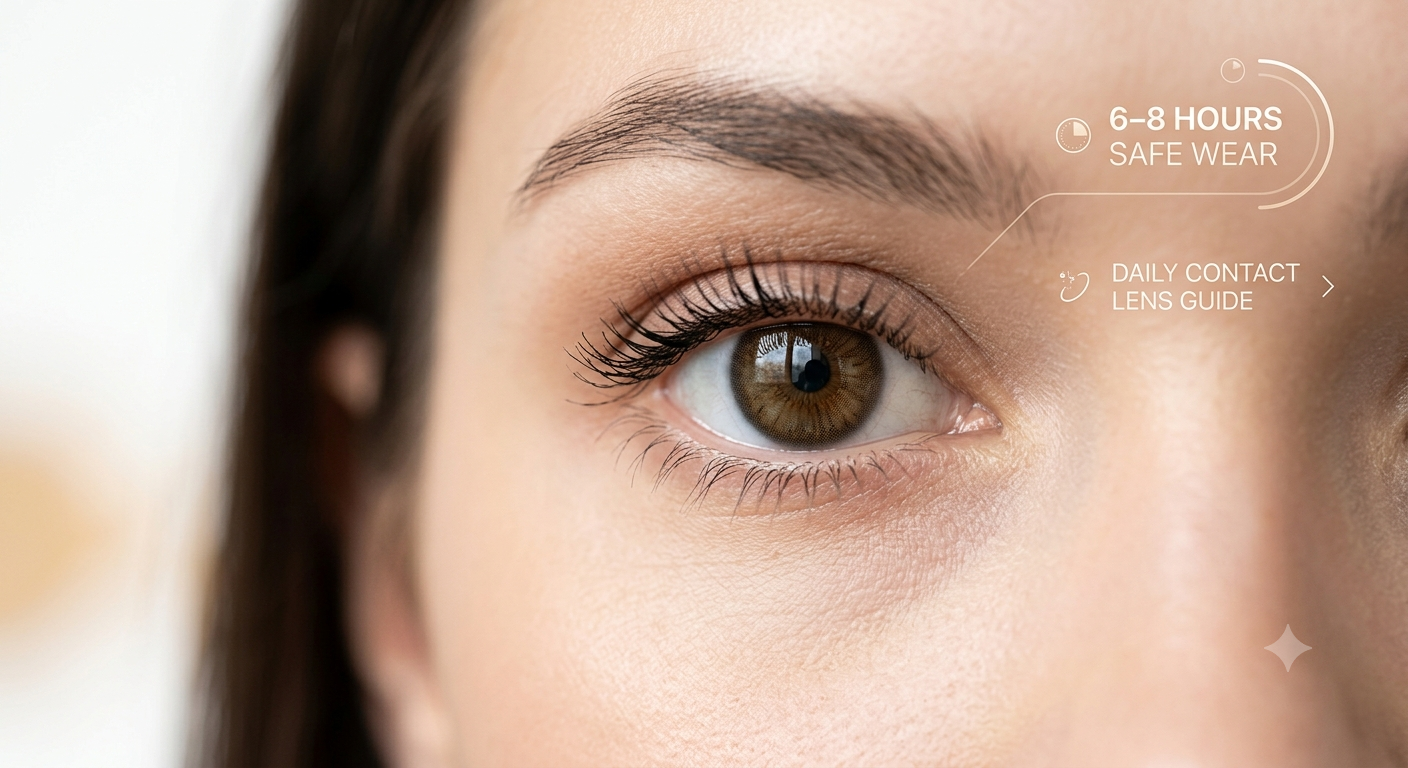
For most users, the safe and comfortable range is around six to eight hours per day. This is the period where oxygen supply, tear stability, and lens hydration remain balanced under normal conditions.
Once you go beyond eight hours, the risk of dryness increases noticeably. The lens starts to absorb more moisture from your tear film, and blinking becomes less effective at maintaining lubrication.
Around ten hours, even premium lenses begin to feel heavier or slightly uncomfortable for many users, especially in dry climates or under heavy screen exposure.
This doesn’t mean damage happens immediately after eight hours, but it does mean your eye is gradually entering a less stable state, and long-term repetition of over-wearing can lead to chronic dryness or sensitivity.
Why Some Colored Contacts Feel Comfortable All Day (And Others Don’t)
Not all colored lenses behave the same way, even if they look similar on the surface.
The biggest difference comes from three things: material, pigment structure, and oxygen permeability.
Modern high-quality lenses often use sandwich technology, where pigment is sealed between two layers of lens material instead of sitting directly on the surface. This reduces irritation and improves long-term comfort because the pigment never directly touches the eye.
Lower-quality lenses, especially cheap cosmetic ones, may use thicker pigment layers or lower-grade materials. These can still look visually appealing but often feel noticeably drier after just a few hours of wear.
Another important factor is oxygen permeability. Lenses with higher oxygen transmission allow your cornea to “breathe” more naturally, which is essential if you plan to wear them frequently.
This is also why two people can wear lenses for the same duration but experience completely different comfort levels.
To learn more, please check out our previous articles: Sandwich Technology Explained: Why Pigment Never Touches Your Eyes.
Can You Sleep With Colored Contacts? (Short Answer: No)
Sleeping in colored contacts is one of the fastest ways to create complications, even if the lenses are labeled as comfortable or soft.
When you sleep, your blink mechanism stops. This means your tear film is no longer actively refreshed, and oxygen delivery to the cornea drops significantly. A lens that feels perfectly fine during the day becomes a sealed barrier overnight.
This can lead to corneal swelling, redness, and in more severe cases, infections that require medical attention.
Even occasional naps while wearing lenses can increase risk, so it’s always recommended to remove them before sleeping, no matter how tired you are.
To learn more, please check out our previous article: Can You Sleep with Contact Lenses? Risks, Safety Tips & What to Do If You Accidentally Do (2026 Guide)
Daily Wear vs Occasional Wear Lenses: A Key Distinction Most People Miss
One of the biggest misunderstandings in the colored contacts market is assuming all lenses are designed for daily use.
In reality, lenses fall into two broad categories.
Daily wear lenses are engineered for repeated use, longer wear time, and higher oxygen transmission. These are typically more suitable for office use, school, or people who wear lenses almost every day.
Fashion or cosmetic lenses, on the other hand, are optimized for appearance rather than extended wear comfort. These often provide stronger color effects, more dramatic transformations, or enhanced visual impact for photography and events.
The difference is not just marketing—it directly affects how your eyes respond over time.
How to Make Daily Wear Safer and More Comfortable
If you plan to wear colored contacts every day, comfort is not something you leave to chance. It is something you actively manage.
The most important rule is hygiene consistency. Even the best lenses will cause irritation if cleaning routines are inconsistent or if lens solution is reused improperly. Fresh solution every time, clean hands before handling lenses, and proper storage are non-negotiable basics.
The second rule is time discipline. Many long-term users develop a habit of wearing lenses from morning to night without breaks, but the eye actually benefits from recovery periods. Taking at least one or two lens-free days per week allows the cornea to reset and maintain long-term stability.
Environmental awareness also matters more than people expect. Dry air, long screen exposure, and strong wind can all accelerate lens dryness even if wearing time is within limits.
Finally, replacement cycles must be respected strictly. Whether the lens is monthly or six-month type, stretching usage beyond intended lifespan is one of the most common causes of discomfort.
Who Should Avoid Wearing Colored Contacts Every Day
Even with perfect habits, not everyone is suited for daily lens wear.
People with naturally dry eyes often struggle because tear production is already limited, making lens wear more noticeable over time. Similarly, individuals with allergy-prone eyes may experience seasonal sensitivity that makes daily wear inconsistent.
Those with long screen exposure without breaks are also at higher risk, since reduced blinking naturally increases dryness.
In these cases, colored contacts can still be used, but more as occasional enhancement rather than daily routine.
Are Colored Contacts Actually Safe Long Term?
When used correctly, high-quality colored contacts are generally considered safe for long-term use.
The key variables are:
lens quality, hygiene discipline, wearing duration, and replacement schedule.
Problems usually arise not from the product itself, but from accumulation of small habits—wearing a little too long, cleaning slightly improperly, or ignoring early discomfort signals.
Your eyes are very good at warning you early. Redness, dryness, or slight discomfort are not things to “push through”—they are signals to adjust behavior.
Final Thoughts
So, can you wear colored contacts every day?
Yes—but only if you treat them as part of a controlled routine, not just a cosmetic accessory.
The safest approach is to think in balance rather than extremes: comfortable hours instead of maximum hours, high-quality materials instead of visual shortcuts, and consistent hygiene instead of convenience shortcuts.
When these conditions are met, colored contacts can safely become part of your everyday appearance, enhancing not just how you look—but how confidently you present yourself.